Enquire Now

Enquire Now
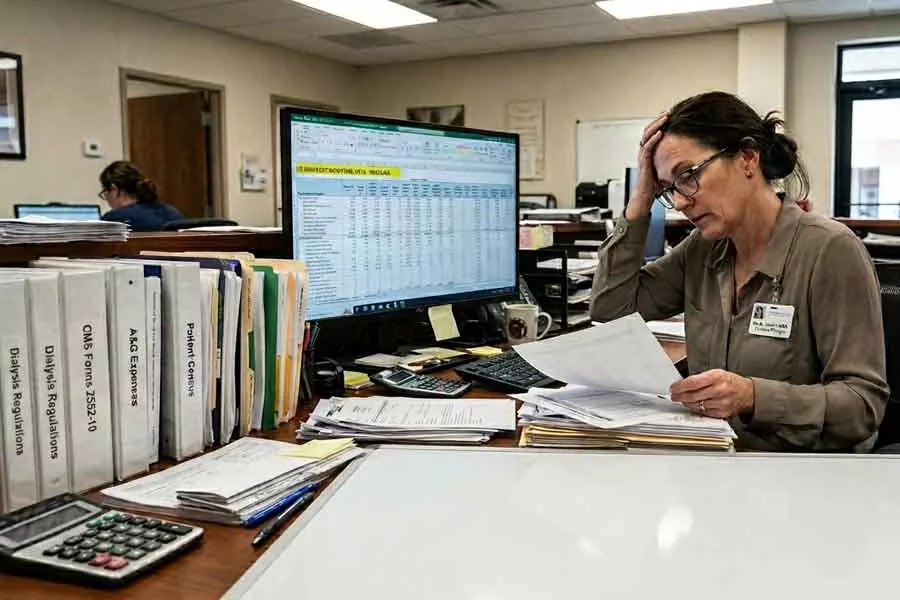
Dialysis centers operate in a complex healthcare environment. They manage patient care, staffing, compliance, and financial reporting every day. However, cost reporting remains one of the biggest operational challenges today.
Medicare cost reports require complete and accurate financial information. These reports directly affect reimbursement processes and compliance requirements. Therefore, dialysis centers must handle reporting with care and precision.
Unfortunately, many facilities face ongoing obstacles during cost reporting. Small reporting mistakes can create larger financial problems later. Additionally, changing regulations often increases reporting pressure. Healthcare organizations that understand these challenges can improve efficiency and reduce risk. They can also build stronger reporting systems for future growth.
Below are the biggest cost reporting challenges facing dialysis centers today.
Healthcare regulations continue to evolve. Therefore, dialysis centers must stay informed about changing reporting requirements.
Rules may change because of policy updates or reimbursement adjustments. However, many organizations struggle to keep pace with those changes.
Staff members often face issues such as:
Additionally, frequent changes create confusion across departments.
Without regular updates, reporting teams may use outdated procedures. As a result, facilities may submit inaccurate information.
Therefore, organizations should monitor industry changes throughout the year.
Documentation forms the foundation of successful cost reporting. However, many dialysis centers struggle with record accuracy.
Missing information creates reporting gaps. Incorrect entries also increase the risk of compliance issues.
Important records often include:
Moreover, poor organization creates additional challenges. Teams often waste time searching for missing records. Delays can then affect reporting timelines.
Therefore, facilities should maintain documentation continuously instead of waiting for reporting deadlines.
Cost allocation remains one of the most difficult reporting areas. Dialysis centers often manage multiple departments and service categories.
Facilities must assign expenses correctly. However, cost allocation mistakes happen frequently.
For example, organizations may struggle with:
Additionally, incorrect allocations may affect reimbursement calculations. Strong allocation methods improve reporting accuracy and financial transparency.
Therefore, organizations should establish clear allocation procedures and regularly review them.
Staffing issues continue to affect healthcare organizations nationwide. Dialysis centers face similar pressures. High turnover creates knowledge gaps. New employees also need time to learn reporting procedures. Furthermore, limited staffing can increase workload pressure.
Reporting teams often experience:
Consequently, rushed reporting often leads to mistakes.
Facilities should invest in staff development and cross-training opportunities. Better workforce preparation improves reporting consistency.

Many dialysis centers still rely on manual reporting processes. However, manual systems often create unnecessary risks.
Employees may enter incorrect numbers or duplicate information. Small mistakes can then affect entire reports.
Common manual reporting problems include:
Additionally, manual workflows consume valuable staff time.
Automated systems can improve speed and reduce errors. Therefore, technology investments often create long-term benefits.
Healthcare organizations must always prepare for possible audits. However, many dialysis centers struggle with audit readiness.
Incomplete records create major concerns during reviews. Missing documentation can also increase financial risks.
Facilities often face audit challenges such as:
Furthermore, audits can create operational stress when preparation remains weak. Strong documentation practices support faster responses during review processes. Therefore, facilities should maintain audit readiness throughout the year.
Cost reporting rarely involves a single department. Financial teams, administrators, billing staff, and operational teams often contribute information.
However, communication gaps create reporting problems. For example, one department may use outdated information while another uses updated records.
This situation often leads to:
Additionally, poor communication increases confusion and frustration. Organizations should encourage regular meetings and shared reporting procedures. Better collaboration supports stronger reporting accuracy.
Some dialysis centers face limited internal resources. Others manage increasingly complex reporting requirements. Therefore, many organizations seek outside assistance.
At this stage, professional support can simplify reporting processes and reduce administrative pressure.
NMP Professional Services, Inc., works with healthcare organizations to strengthen reporting accuracy and improve compliance efforts. Experienced support teams help facilities manage documentation, streamline reporting processes, and reduce operational challenges. Professional guidance can also help organizations adapt to changing regulations.
Many facilities focus only on reporting deadlines. However, long-term planning creates stronger results.
A structured reporting strategy should include:
Furthermore, proactive planning reduces last-minute stress. Facilities that prepare consistently often avoid major reporting problems. Dialysis centers operate in a demanding healthcare landscape. Therefore, strong cost reporting practices remain essential for financial success and compliance stability.
Organizations that improve documentation, strengthen communication, train staff, and adopt better systems can significantly reduce reporting challenges. Additionally, preparation creates smoother workflows and stronger operational confidence. Healthcare facilities that build efficient reporting systems position themselves for long-term success.
NMP Professional Services, Inc continues to support healthcare organizations with reliable reporting solutions and compliance-focused strategies for future growth.
Cost reporting supports accurate reimbursement, financial transparency, regulatory compliance, and stronger operational decision-making.
Manual entries, missing records, communication gaps, and poor documentation frequently lead to reporting errors today.
Dialysis centers should review records monthly to improve accuracy and strengthen compliance management efforts.
Staff shortages increase workloads and delay reporting, impacting accuracy and operational efficiency.
Professional assistance improves documentation, reduces errors, and strengthens reporting processes for long-term compliance success.
© 2026 NMP Professional Services, Inc. All Rights Reserved
